Your own iPad becomes the check-in screen. Visitors sign themselves in, staff sign in from their phones at the door, and reception sees everyone who is in the building.
Your data stays in Canada. The application and its database both run in Azure's Canada Central region — not a head office here with the records somewhere else. Coast to coast to coast, priced in Canadian dollars.
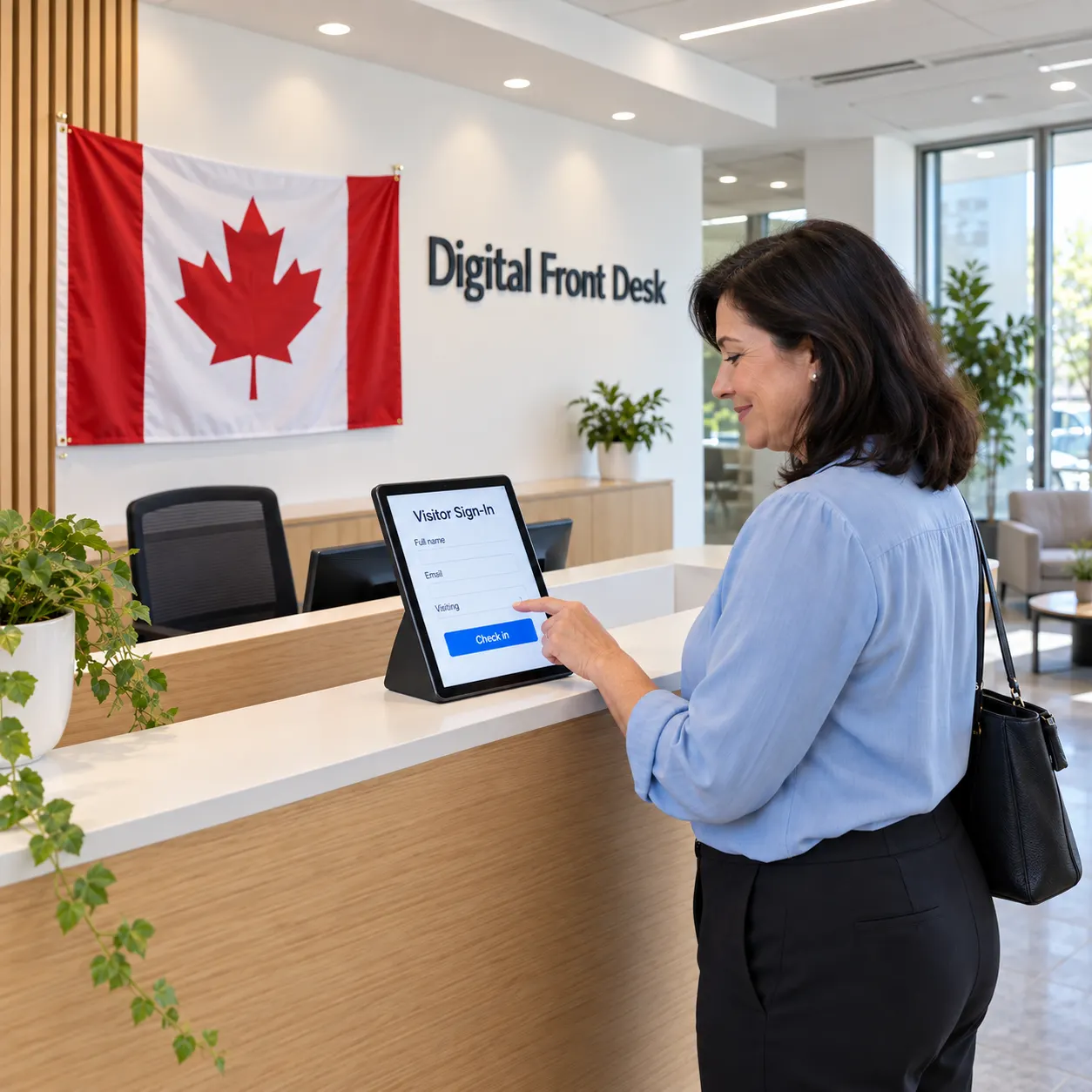
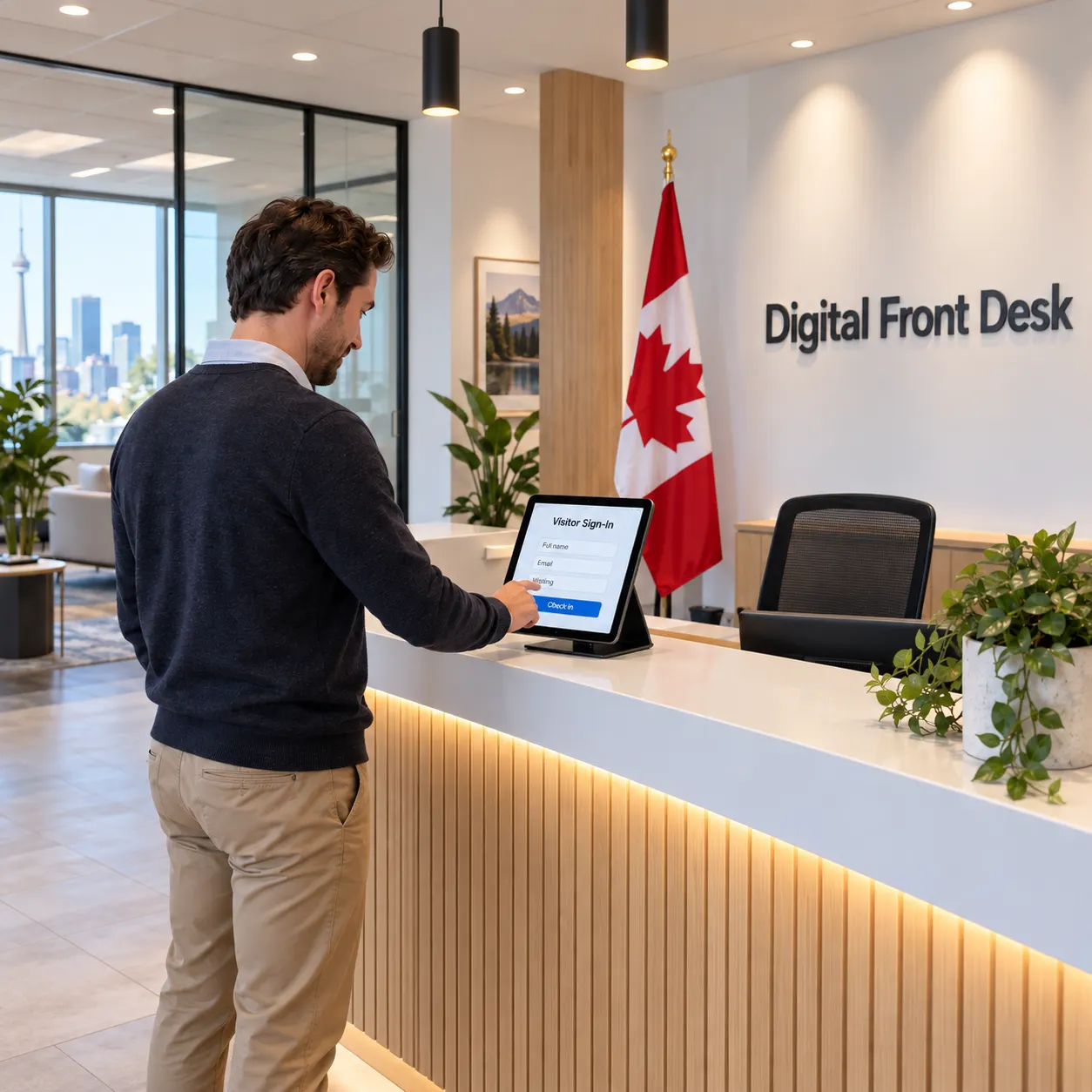
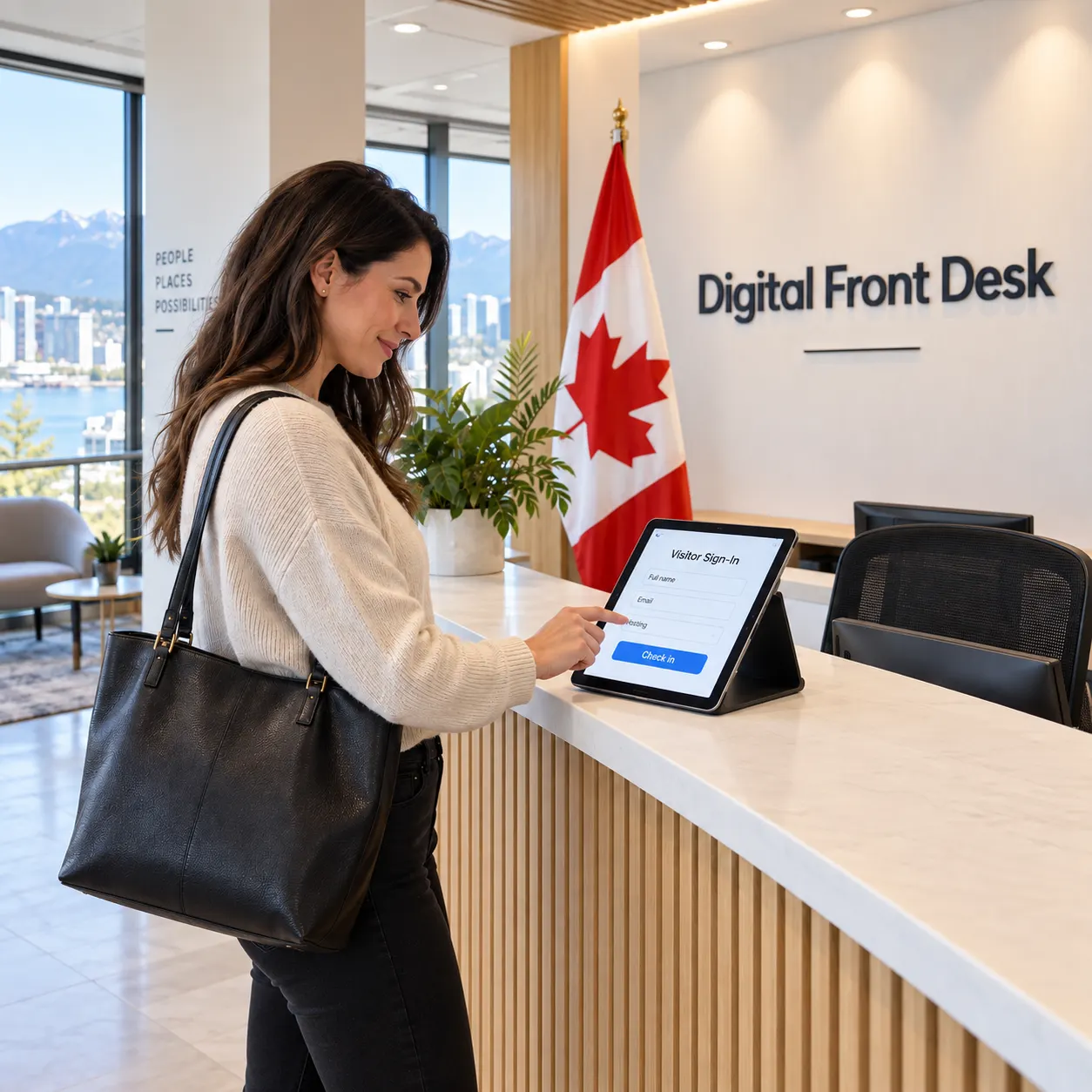
Four things happen, and nobody installs anything to make any of them happen. Pick a step.
One question at a time, in large type, on your own tablet. No app, no account, no password. They get a badge number at the end, and the confirmation shows no name, because a waiting room can read over somebody's shoulder.
The questions are yours. Reword them, reorder them, add your own, or retire one without losing the answers already given.
Whoever the visitor came to see gets a text message or an email, each person choosing which. It carries two short links: one to say I'll take this, and one to close the visit when it is over. Neither needs a login, so the people being visited never have to become users of anything.
If the visitor did not ask for anyone by name, the message goes to the people you nominated for unclaimed arrivals, and the first to tap takes it.
One page, one count, and it includes staff as well as visitors, because the number a fire warden needs is everybody, not everybody with a badge. Each row says who is here, who they came to see, why, and whether somebody has already taken them.
Check anyone out with one button, or download the day as a CSV file.
A poster by the staff entrance carries a QR code. Somebody scans it with their own phone, picks their name once, and from then on sees a single button: sign in, or sign out. No app and no login for them either.
Reception reads the roll call beside the visitor list, with the time each person arrived and everyone who has already gone home.
Per organisation, per month, in Canadian dollars. Visitors are unlimited on every plan — you are never billed for a busy day. Pay for the year and every plan is 20% less.
A single reception desk.
CAD per month, billed monthly
$55 a month billed annually
Email support, answered the next working day.
Try it freeA clinic, firm or office with a full team.
CAD per month, billed monthly
$96 a month billed annually
Email and telephone support, answered the next working day.
Try it freeA care home, campus or multi-building site.
CAD per month, billed monthly
$319 a month billed annually
A number that reaches somebody at any hour if check-in is down.
Try it freeRound the clock means one thing: if visitors cannot check in, we answer at any hour, any day. Everything else is the next working day. More than 500 people? Tell us what you need. Prices exclude tax.
Everything here is how the software is configured out of the box, not a description of a plan you have to ask about.
An iPad or any tablet with a browser, and Wi-Fi. The check-in screen is a web page, not an app to install.
Canada. Application and database both in Azure Canada Central.
Off unless you switch them on. Neither is the default.
Your choice of three: keep what a visitor typed, clear it after a set number of days, or clear it as soon as the visit is over.
Whoever you list, by email or text, each choosing their own. Staff on that list do not need a login.
We set it up with you on a call: your questions, your staff list, your poster. There is nothing to install at your end.
One Ontario clinic, on its first full day of use: thirteen visitors checked themselves in, and seventeen members of staff signed in from their own phones at the door. Nothing was typed twice and nothing was on paper.
That is one customer's first day, not a claim about what it will do for you. We would rather show you the screens than argue from it.
Tell us the trade you are in, the province, roughly how many people come through in a week, and whether you already have a tablet. We will tell you honestly whether this fits before anyone talks about money.
Reading this because of a privacy question rather than a product one? The privacy pages set out what is collected, what is kept and who processes it. They were written by the people who built the software and have not been through a lawyer, and they say so.
 Digital Front Desk